How to stop a porn addiction
Stopping a porn addiction is not about white-knuckling more willpower. It is about understanding the loop you are caught in, cutting off the easy access, and rebuilding the reward, with one person in your corner. Here is the plan, step by step.
How to stop a porn addiction, in 6 steps
- Map your real triggers. Find the cues that fire it before you fight it.
- Cut off instant access. Add friction so it is not one tap away.
- Replace the reward. Keep the cue, swap the routine in the middle.
- Get one person in your corner. Recovery rarely sticks in secret.
- Ride the urges and the flatline. They peak, then pass.
- Plan for a relapse. A slip resets one interval, not the journey.
If you have tried to stop watching porn by sheer willpower and ended up back where you started, you are not weak and you have not failed. A compulsive porn habit is wired in through thousands of repetitions, and raw willpower does not outlast wiring. The good news is that the same brain that learned the habit can unlearn it, as long as you change the conditions around it instead of just gritting your teeth.
This guide is the recovery-focused version: what a porn addiction actually is, why willpower alone keeps failing, and a six-step plan to stop it for good, including how to handle withdrawal, urges and the inevitable slip. If you mainly want the practical taper method, our companion guide on how to quit porn gradually covers reducing the frequency and stretching the gap. Use them together.
First, is it actually a porn addiction?
"Addiction" is a heavy word, and not everyone who watches porn has one. What matters is not the label but the pattern. The World Health Organization recognises Compulsive Sexual Behaviour Disorder in the ICD-11, which describes sexual behaviour, including porn use, that feels out of your control and continues even though it is hurting you.
Signs it has tipped from a habit into a compulsion:
- You watch far more, or far more extreme, than you mean to, and cannot reliably stop.
- You have tried to cut down before and it did not last.
- It eats into your sleep, work, focus or relationships, and you keep going anyway.
- You feel shame or distress about it, but reach for it again to escape that exact feeling.
- You need more novelty or intensity than you used to for the same hit.
If several of those ring true, treat it as a compulsion to retrain, not a character flaw to punish. The steps below are the same techniques used in professional recovery programs. For personal medical advice, talk to a doctor or therapist.
Why willpower alone does not stop a porn addiction
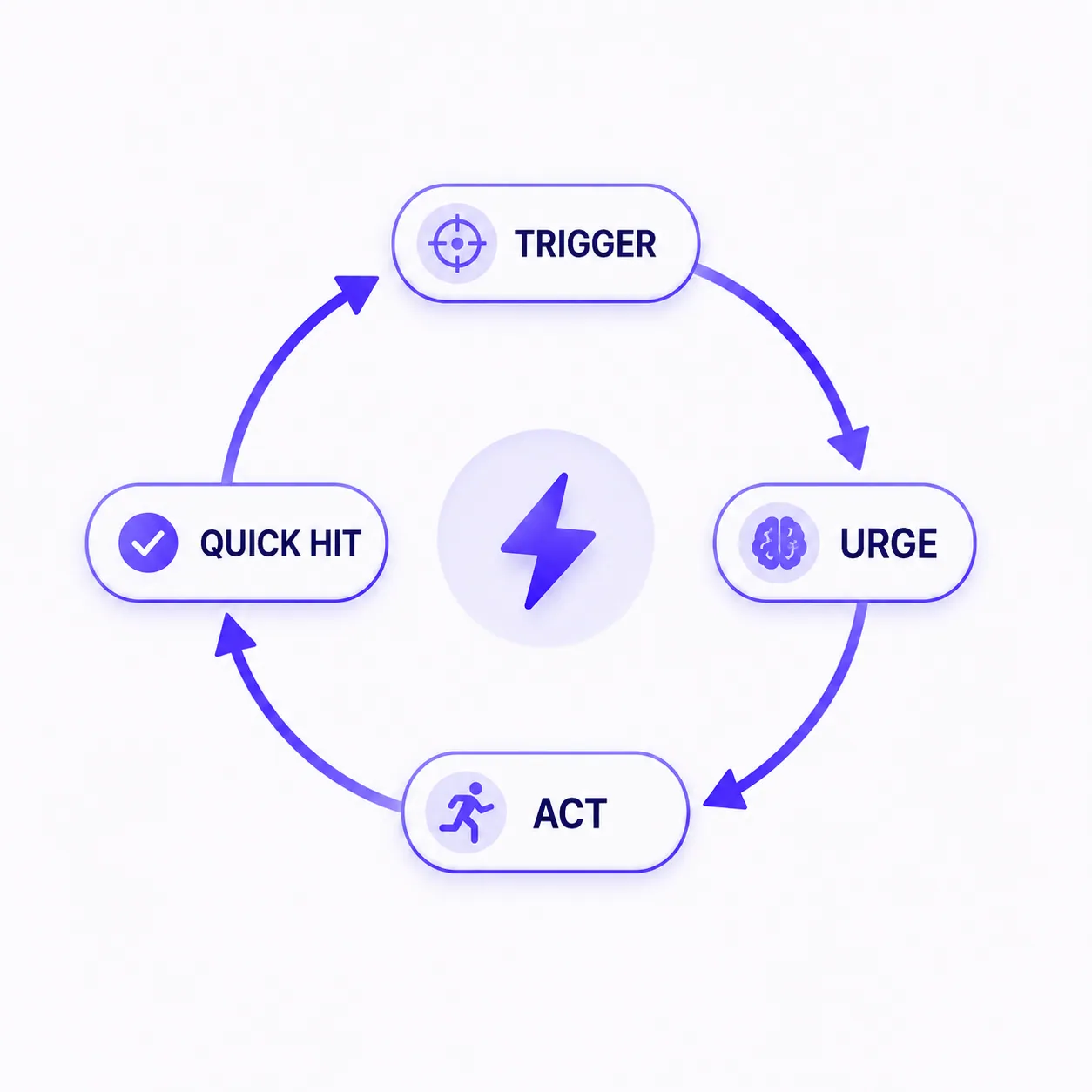
Porn is what researchers call a supernormal stimulus: endless novelty, on demand, far stronger than anything the brain evolved to expect. Each session releases a surge of dopamine, the chemistry of "do that again". Repeat it enough and the brain adapts: it dials down its sensitivity, so you need more, more often, or more extreme, just to feel the same. That is tolerance, and it is why the habit quietly escalates.
At the same time, the loop runs on autopilot. A cue you barely notice, stress, boredom, loneliness, tiredness or just an empty evening, fires an urge, the urge runs the routine, and the routine pays out relief. Willpower tries to fight the very last link in that chain, at the worst possible moment, when the urge is loudest. That is a losing battle by design. The winning move is to change the cues and the access earlier in the chain, so willpower is your backup, not your only defence.
How to stop a porn addiction: the 6-step plan
Step 1. Map your real triggers
Before you cut anything, find out what actually sets it off. For about a week, keep your habit as normal but log each time: the day, the hour, and the mood right before. No judgement, this is data, not a confession. Two things will surface: your real frequency, which is almost always higher than the number in your head, and a short list of triggers that reliably come first.
Most triggers fit the recovery shorthand HALT: hungry, angry, lonely, tired. Porn is rarely about sex in those moments. It is a fast way to escape a feeling. Once you can see your top three triggers written down, you can plan a different answer for each, which is exactly what the next steps do.
Step 2. Cut off instant access
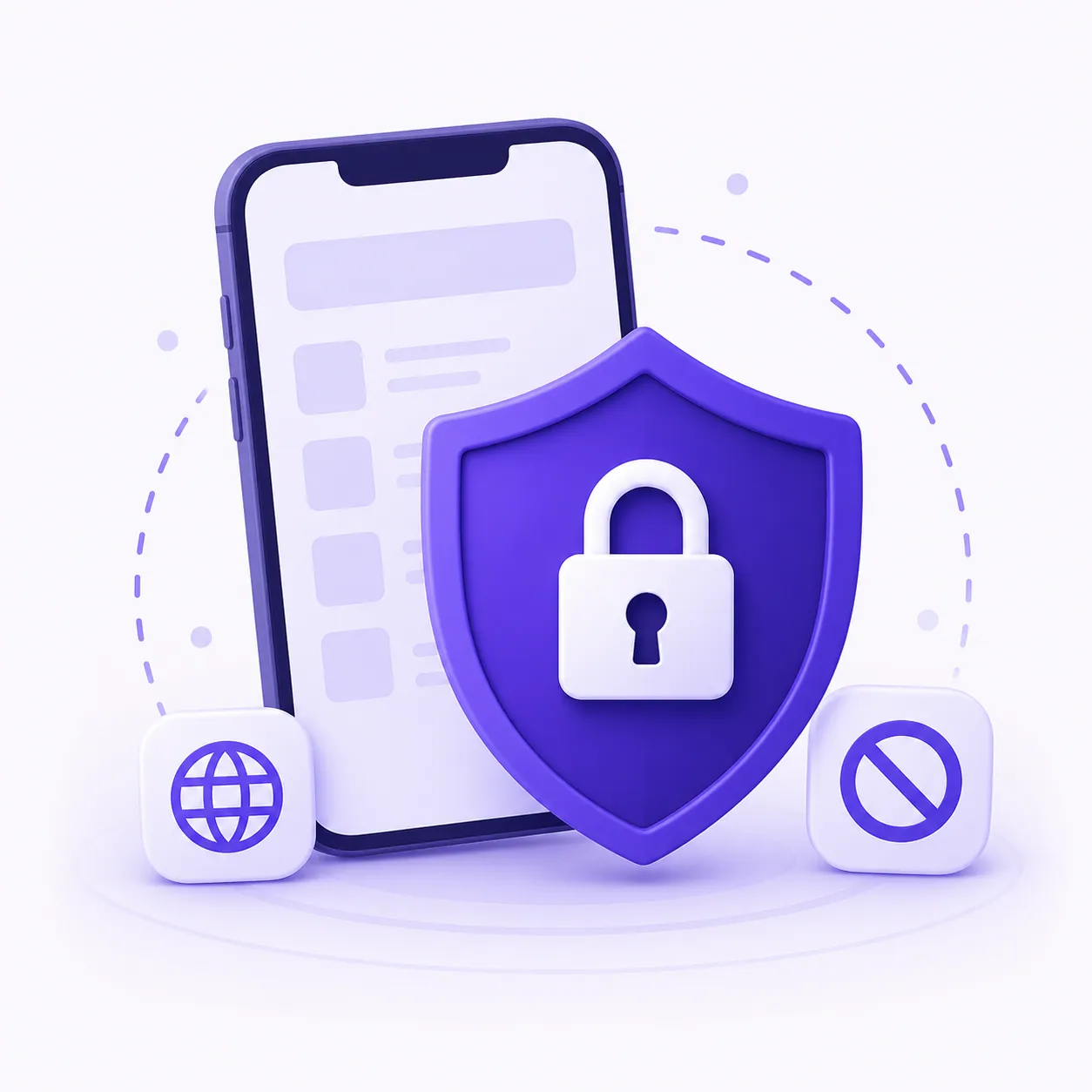
Almost every relapse rides on the same thing: instant, private, one-tap access. Remove that and you remove the fuel. A blocker is not the whole answer, but it is the layer that buys you the ten seconds between an urge and an action, and ten seconds is often all it takes for the urge to pass.
Appcognito blocks over 750,000 adult sites on-device across every app and browser, with live keyword filtering for the rest. The crucial part for addiction is the lock: you can hand the passcode to a trusted person so the block cannot be switched off the second the urge spikes. That turns "I just need to disable it for a minute" into a real barrier instead of a formality.
Step 3. Replace the reward, do not just remove it
A blocked habit with nothing in its place just leaves a hole, and the brain hates a hole. The loop runs cue, routine, reward, and you cannot delete the cues, stress and boredom are part of life. So keep the cue and the reward, and swap the routine in the middle. Decide in advance what you will do the instant a known trigger fires.
The replacement has to deliver a real change of state, not a token gesture. Movement works because it shifts your physiology fast: a brisk walk, a set of press-ups, a cold shower. So does connection: a message to a friend, a few minutes of a hobby you actually like. The rule is to choose it before the urge, write it down next to its trigger, and make it the default answer so your brain stops reaching for the old one.
Step 4. Get one person in your corner
Porn addiction thrives in private. The single biggest predictor of whether people stick to recovery is not willpower, it is whether anyone else knows. You do not need to announce it to the world. One trusted person, a partner, a friend, a sponsor, or an anonymous community, is enough to break the secrecy that keeps the loop alive.
Make the accountability concrete. Let that person hold your blocker's code. Agree to a quick weekly check-in, even just a one-line message. Tell them about a slip the same day, not a month later. When someone else can see the streak, the late-night "no one will know" voice loses most of its power.
Step 5. Ride out the urges and the flatline
Urges feel like they will climb forever, but they do not. An urge is a wave: it rises, peaks, and falls, usually within a few minutes, as long as you do not act on it. The skill, called urge surfing, is to notice it, name it ("this is a craving, not an emergency"), and let it pass without judgement. Each wave you ride without acting makes the next one a little weaker.
Expect a flat patch too. Many people hit a stretch in early recovery, often called the flatline, where mood, drive or libido dips and everything feels grey. That is not a relapse warning, it is your reward system recalibrating after months of high stimulation. It is temporary. Knowing it is coming is half the battle, because the flatline is where a lot of people quit quitting, right before things get better.
Step 6. Plan your response to a relapse
You will probably slip, especially early on, and that is built into recovery, not a sign it has failed. The damage is almost never the slip itself. It is the spiral that follows: "I have ruined it, so I may as well binge", which turns one moment into a lost week. The people who recover fastest treat a lapse as information.
So decide your response in advance. After a slip, ask what cue set it off, where the gap in your plan opened, and what one thing you will change, then restart that same day. A slip resets the interval you were on, nothing more. Track your clean streak as a number you can see and protect, and let your blocker and your accountability partner carry the load at the moments willpower cannot.
You are not chasing a flawless record. You are stacking enough small wins that "not today" slowly becomes "not anymore".
What to expect: the recovery timeline
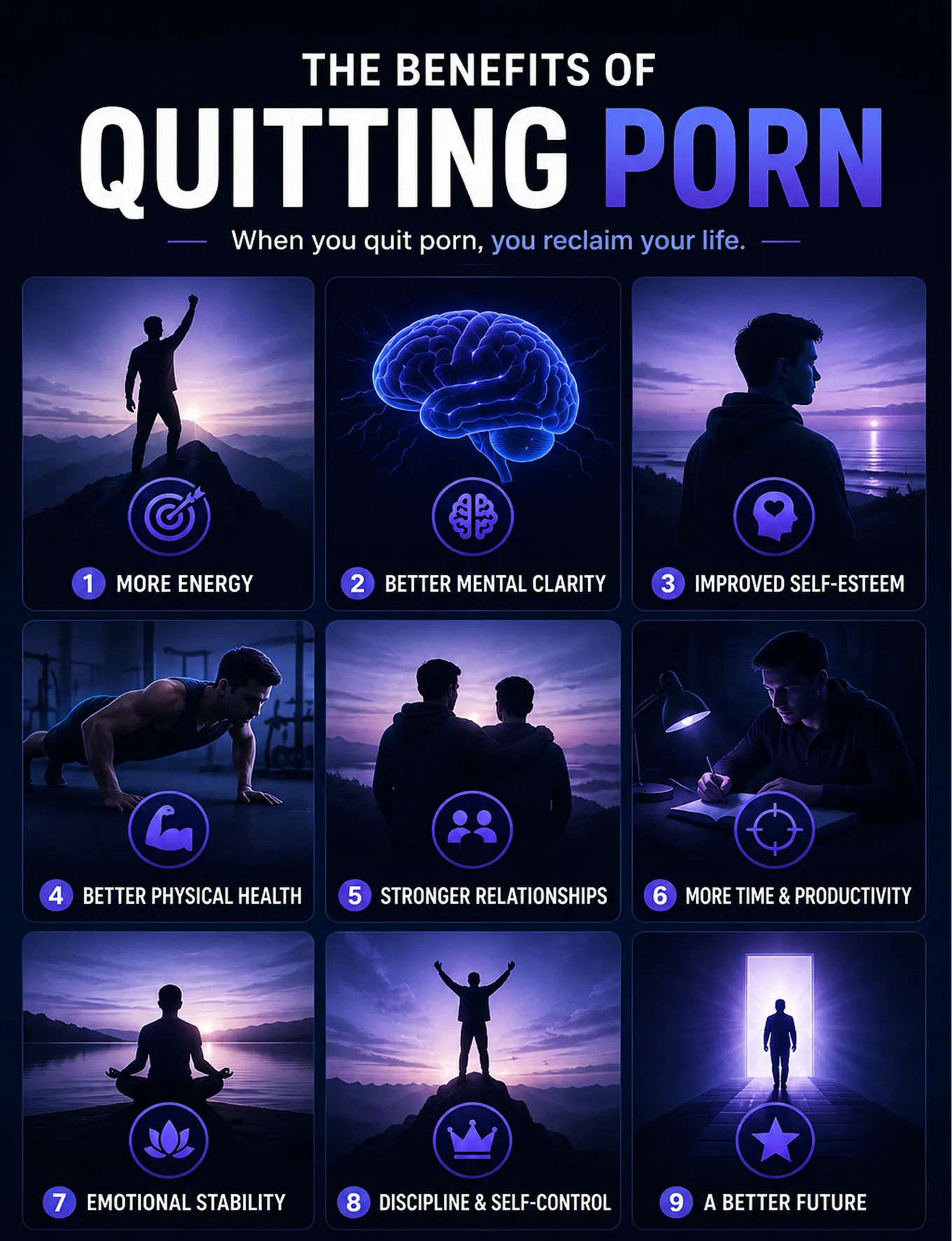
Recovery is not linear, but the rough shape is predictable, which makes it easier to hold the line when a hard week hits.
- Week 1 to 2: the strongest, most frequent urges. This is where the blocker and your replacements earn their keep.
- Week 2 to 4: urges start to space out and weaken. You may hit the flatline here, a grey, low-motivation patch. Keep going.
- Month 1 to 3: mood, focus and sleep noticeably improve, and clean stretches start to feel normal rather than heroic.
- Beyond 90 days: for most people, staying free is the default. The reward system keeps rebalancing quietly in the background.
Judge yourself by the trend, not by any single day. Gaps getting longer and urges getting weaker is what recovery looks like from the inside.
When to get professional help
If your use feels completely out of control, is tied to trauma, depression or anxiety, or is seriously harming your relationships, work or wellbeing, please reach out for proper support. A therapist trained in compulsive sexual behaviour, often using CBT, can get you there faster and more safely than going it alone. Asking for help is a strength, not a failure, and it is not a sign you are beyond help. For personal medical advice, talk to a doctor or therapist.
Related guides: why do people get addicted to porn, how to quit porn gradually, how to block adult content on Android, or set up Appcognito's adult content and porn blocker and lock it behind a trusted person's code.
Frequently asked questions
Is porn addiction a real addiction?
Clinicians debate the exact label, but the pattern is real and recognised. The World Health Organization lists Compulsive Sexual Behaviour Disorder in the ICD-11, which covers porn use that feels out of control and continues despite the harm it causes. Whether you call it an addiction, a compulsion or a stuck habit, the way out is the same: change the cues, the access and the reward, and get support.
How long does it take to stop a porn addiction?
Think in weeks and months, not days. The sharpest urges usually ease within the first two to four weeks of a clean stretch, and most people say it feels like the new normal somewhere around 90 days. The brain's reward system keeps rebalancing for months after that. Judge progress by whether your gaps are getting longer, not by any single perfect day.
What is the porn flatline?
The flatline is a stretch early in recovery where motivation, mood or libido dip and you feel flat or numb. It is the reward system recalibrating after constant high stimulation, and it is temporary. It tends to pass on its own as your baseline resets, so treat it as a sign the process is working rather than a reason to relapse.
Can I stop a porn addiction on my own, without therapy?
Many people do, especially with structure, a blocker and one accountability partner. But if your use is tied to distressing thoughts, trauma, depression or anxiety, or it feels completely out of control, a therapist trained in compulsive sexual behaviour will get you there faster and safer. Asking for help is a strength, not a failure.
Does a porn blocker actually help with addiction?
Yes, as one layer. A blocker does not fix the underlying habit on its own, but it removes the instant, private access that powers most relapses, and that friction is exactly what protects a growing clean streak. Appcognito blocks over 750,000 adult sites on-device and lets a trusted person hold the code, so it cannot be undone on impulse at 1am.
How is stopping an addiction different from just quitting porn?
It is the same destination with more support. If you mainly want a practical method to cut down and stop, our guide on how to quit porn gradually walks through reducing the frequency and stretching the gap. This guide adds the recovery layer on top: understanding the addiction, handling withdrawal and urges, and knowing when to get professional help.
Cut off the access, keep the streak
Appcognito blocks over 750,000 adult sites on-device, adds the friction that stops most relapses, and lets a trusted person hold the code so it cannot be undone on impulse. Private by design, free to start.